Mushroom Flower: A Boutique Sweatshirt Embroidery Review
First Impressions: Charm, Not Clutter
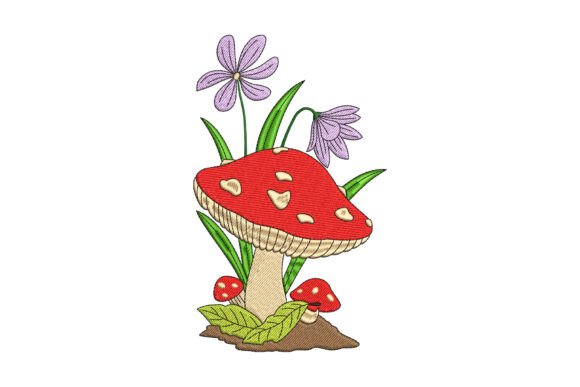
As an embroidery designer who’s stitched for over a dozen boutique brands—from Brooklyn-based loungewear labels to Pacific Northwest apothecary apparel—I opened Mushroom Flower expecting whimsy. What I found was something quieter, more intentional: a design that balances organic shape with refined restraint. It doesn’t shout “mushroom” or “flower” outright—it *whispers* both, folding them into a single cohesive motif. The layout feels grounded, not sprawling; the curves are soft but deliberate, and the negative space is generous. That tells me this isn’t just a clip-art floral—it’s a machine embroidery design built for breathability on fabric. On screen, it reads as gentle and hand-drawn; in stitch, it’ll translate as tactile, dimensional, and quietly confident.
How Mushroom Flower Lives on Sweatshirts
This is where Mushroom Flower earns its keep. On neutral sweatshirts—think oatmeal, heather grey, or stone—it becomes a subtle signature: visible enough to spark a smile, quiet enough to avoid visual fatigue. On dark fabric like charcoal or navy, it gains quiet elegance—especially with tonal thread colors (a slightly lighter grey thread on black, for example) that let the stitch texture shine without contrast overload. Pastel sweatshirts? Here, Mushroom Flower leans into soft femininity without saccharine sweetness—its restrained scale and open fill keep it from reading as juvenile. And on oversized hoodies or chunky seasonal knits? It holds up beautifully. Unlike dense, high-stitch-count florals that flatten on thick fabric, Mushroom Flower’s moderate stitch density lets the fabric’s texture peek through, reinforcing that handmade, small-shop authenticity buyers seek.
Placement & Purpose: More Than Just Chest Art
Yes, Mushroom Flower works perfectly centered above the left chest—a classic boutique brand move—but it also thrives elsewhere. As a sleeve accent on a relaxed hoodie? Delightful. Tiny and intentional, placed just above the cuff line. As a back design? Scale it up slightly (check your embroidery file’s resize limits first), and it becomes a quiet centerpiece—ideal for lifestyle product photography where composition matters. For custom apparel branding, it functions as a versatile design asset: not so literal it locks you into one season or aesthetic, yet distinct enough to build recognition over time. Think of it as your brand’s quiet punctuation mark—not the headline, but the thoughtful pause that makes people remember your voice.
Thread Colors & Fabric Texture: Where Intention Meets Reality
Thread color choice is critical—and Mushroom Flower rewards nuance. Avoid stark black-on-cream unless that’s your exact brand language; instead, lean into earthy, muted palettes: mushroom brown, sage green, dusty rose, or warm taupe. These thread colors harmonize with the design’s inherent rustic-playful duality while keeping it premium. Because the description notes it’s “created to add a subtle touch of charm,” I’d recommend avoiding overly glossy or metallic threads—they’d clash with the design’s organic mood. Also consider fabric texture: on brushed fleece or loopback cotton, a light to medium-weight cutaway stabilizer will support the design without stiffening the hand-feel. Too much stabilizer kills the cozy factor; too little risks puckering. Test on your exact sweatshirt fabric first—Mushroom Flower’s openness means it’s forgiving, but not indestructible.
Commercial Practicality: Will It Hold Up?
For Etsy sellers and small shop owners stitching for real customers, durability isn’t optional—it’s trust. Mushroom Flower passes the wash-test instinctively: no ultra-fine stems, no isolated satin-stitched petals begging to snag, no dense fills that’ll crack after three cycles. Its stitch density sits in that sweet spot—enough coverage to read clearly at 3–4 inches wide, light enough to flex with the fabric. That said: always check your embroidery file’s recommended hoop size before digitizing for production. A design this balanced can easily be hooped in a 4x4 or 5x7—but if you’re scaling for back placement, confirm compatibility. Also verify whether your version includes underlay or jump-stitch optimization; those details impact commercial embroidery consistency across dozens of units.
Why This Design Elevates Your Boutique Brand
Mushroom Flower doesn’t just decorate—it communicates. It signals care, curation, and creative intention. In a market saturated with generic florals and over-digitized motifs, this design feels like a conversation starter—not just “what’s that?” but “who made this?” That builds buyer trust. When styled in natural light with linen napkins or ceramic mugs (hello, printable mockup potential), it reinforces a cohesive, lifestyle-aligned brand identity. For digital sellers, it’s a strong visual anchor: easy to feature in carousel posts, consistent across variations, and distinctive enough to stand out in crowded Etsy search results for “floral sweatshirt embroidery” or “botanical hoodie design.” Most importantly, it honors the handmade product ethos—not by looking rough or unfinished, but by feeling human-scaled, thoughtful, and unhurried.
A Final Note for Creative Entrepreneurs
If you're evaluating Mushroom Flower for your next limited drop, ask yourself: does it reflect the feeling you want people to have when they hold your sweatshirt? Not just “cute”—but calm, connected, quietly joyful? That’s the mood it carries. It’s not bold. It’s not minimalist. It’s *present*: rooted, soft-edged, and full of gentle detail. Whether you’re an embroidery shop adding to your design library, an apparel decorator building a capsule collection, or an Etsy seller launching your first sewn line—Mushroom Flower is a reliable, resonant choice. Just remember to verify file specifics—hoop size, stitch count range, and format compatibility—before committing to bulk production. Because even the most charming design needs solid technical foundations to thrive in the real world of sweatshirt embroidery.