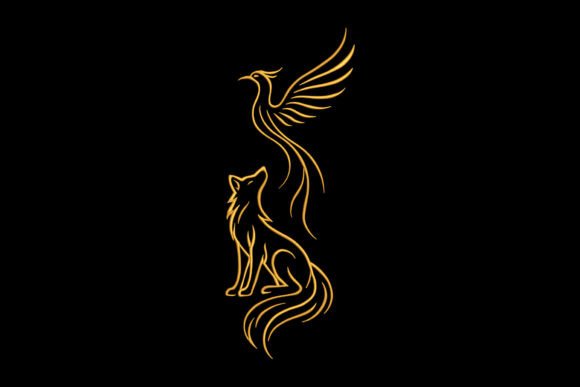
Mystic Phoenix and Fox Outline
A Designer’s First Glance: Elegance with Quiet Confidence
When Mystic Phoenix and Fox Outline appeared on my screen, I paused—not because it shouted for attention, but because it invited quiet study. The composition balances mythic symbolism with clean, intentional line work: the phoenix’s upward curve meets the fox’s grounded poise in a seamless outline that breathes without overcrowding. It doesn’t lean into busy ornamentation or trendy minimalism—it lands somewhere more enduring: thoughtful, slightly mystical, and deeply wearable. As a designer who’s stitched hundreds of Birds category files for client apparel and boutique merchandise, I immediately saw its versatility—not as a “statement piece,” but as a subtle signature. Think embroidered linen tea towels for a local café, monogrammed baby onesies for a mindful nursery brand, or tonal stitching on oatmeal sweatshirts for an indie clothing label.
Real-World Stitching: Where This Design Truly Lives
Last week, I prepped Mystic Phoenix and Fox Outline for a custom order: two matching tote bags for a small bookstore launching a folklore-themed gift collection. Cotton canvas, medium-weight stabilizer, 40-weight rayon thread in charcoal and warm taupe. The result? Crisp, confident lines—even at 3.8 inches wide—no feathering, no skipped stitches, and zero distortion around the fox’s ear tip or the phoenix’s tail taper. That tells me the stitch path is well-planned. It performed equally well on a lightweight chambray apron (with tear-away + cut-away combo stabilizer) and a brushed cotton pillow cover (where I reduced top tension slightly to prevent puckering). For Etsy sellers listing handmade embroidered patches, this design translates cleanly into a single-layer satin stitch border—no fill stitch needed, so it sews fast and wears well. And yes, it holds up beautifully on baby embroidery projects: soft enough for onesies, distinct enough for gifting, and symbolic enough to feel meaningful without being cliché.
Where Caution Meets Craftsmanship
Mystic Phoenix and Fox Outline shines on stable, flat surfaces—but like any strong outline design, it asks for intentionality in execution. On stretchy fabrics (think ribbed knit tees or lightweight jersey), skip the hoop-only approach; use a light cut-away stabilizer *behind* and spray adhesive *on* the fabric to keep that elegant line from wavering. Dark fabrics demand careful thread color testing—what reads as delicate on ivory may vanish on navy unless you choose high-contrast thread or add a subtle underlay. Curved surfaces like caps or curved tote handles require repositioning the design to follow grain, not force it. And while the detail level is refined, avoid shrinking it below 2.5 inches: the inner curve where fox meets phoenix tightens just enough that tiny hoop sizes (under 4x4) risk losing definition in the negative space. Also, skip dense decorative accents *around* it—this design earns its impact through simplicity, not embellishment.
What It Adds to Your Finished Product—Beyond the Thread
For craft business owners and Etsy sellers, Mystic Phoenix and Fox Outline quietly elevates perceived value. It reads as intentional—not generic clip art, not overdesigned, but curated. Customers notice that. When used on personalized gifts (a holiday embroidery hoop kit, a wedding guest book cover), it signals care in selection, not just execution. On small shop merchandise—like branded kitchen towels or limited-run sweatshirt drops—it supports brand consistency without locking you into one aesthetic: pair it with earthy neutrals for a grounded look, or metallic thread for quiet luxury. It also photographs exceptionally well in printable mockups, especially flat-lay shots on natural textures—linen, unbleached cotton, raw wood—because its outline-based structure avoids visual noise. That matters when your digital embroidery file competes in crowded search results or Etsy listings.
Practical Notes Every Embroidery Designer Should Run Through
- Always test first: Run Mystic Phoenix and Fox Outline on scrap fabric matching your final project’s weight and weave—even if it’s “just an outline.”
- Check contrast early: View your thread colors against both light and dark fabric swatches before stitching the real piece.
- Review stitch density visually: Zoom in on your embroidery software—look for tight clusters near joints or curves where thread buildup could cause stiffness.
- Confirm hoop size compatibility: If your machine has a 5x7 limit, verify the design fits comfortably with room to spare—especially if adding text later.
- Inspect small details: Does the fox’s eye dot land cleanly? Does the phoenix’s wingtip taper without fraying? These define professionalism.
- Test black-and-white mockups: If selling digitally, ensure the outline remains legible and balanced without color crutches.
- Stabilizer isn’t optional: Even on stable fabrics, a light tear-away prevents ghosting and keeps edges sharp.
- Licensing matters: Before listing finished products or reselling the digital embroidery file, confirm usage rights—especially for commercial embroidery or craft fair sales.
Mystic Phoenix and Fox Outline isn’t flashy—but it’s reliable, evocative, and quietly sophisticated. It works for the hobbyist stitching a baby embroidery set, the apparel decorator building a seasonal capsule collection, and the Etsy seller refreshing their best-selling tote bag design. It earns trust not by shouting, but by holding space—cleanly, gracefully, and with unmistakable craft. That’s the kind of embroidery file that becomes a staple, not a season.